Post-Mastectomy
Nerve Repair

Understanding Resensation®:
Restoring Sensation After a Mastectomy

Numbness isn’t the only option. Incisions and stitches heal with time. But numbness and lack of sensation can be permanent—a constant reminder of what you’ve been through. With Resensation®, it’s possible to feel closer to normal after a mastectomy—to surrender one less thing to cancer.

WATCH VIDEOS BELOW:

Resensation® Nerve Repair Technique
The Impact of Post-Masectomy Numbness

Resensation® Nerve Repair Technique | What is Resensation®?

Having a mastectomy creates an immediate, noticeable impact on your life—both physically and emotionally. It can be hard to fully understand all the ways it will change your life.

A significant impact is the loss of sensation to the chest area. During a mastectomy, the breast tissue is removed, cutting the nerves that supply feeling to the breast and nipple. When nerves are severed, nerve signals are disrupted. This can leave the breasts with a total or near-total loss of sensation.

Why does sensation matter?

Sensation is a vital function that allows us to feel touch, temperature and even pain. Sensory nerves send signals that allow us to feel, interact with the world around us and also help keep us safe.

Historically, sensory nerves were not repaired during breast reconstruction surgery, leaving women with limited to no return of sensation. Though reconstructed breasts can achieve cosmetically desirable results—women typically cannot feel touch or temperature in the chest area after reconstruction.

To put it in perspective, think about the numbness you feel after a dental procedure. It’s uncomfortable and a little awkward. Now, imagine that feeling over a much larger portion of your body, knowing it will be permanent.

That’s why Dr. Zeineh is offering the proven surgical nerve repair technique, Resensation®, that can help women not only look, but potentially feel more like themselves again after a mastectomy.

Why choose Resensation?

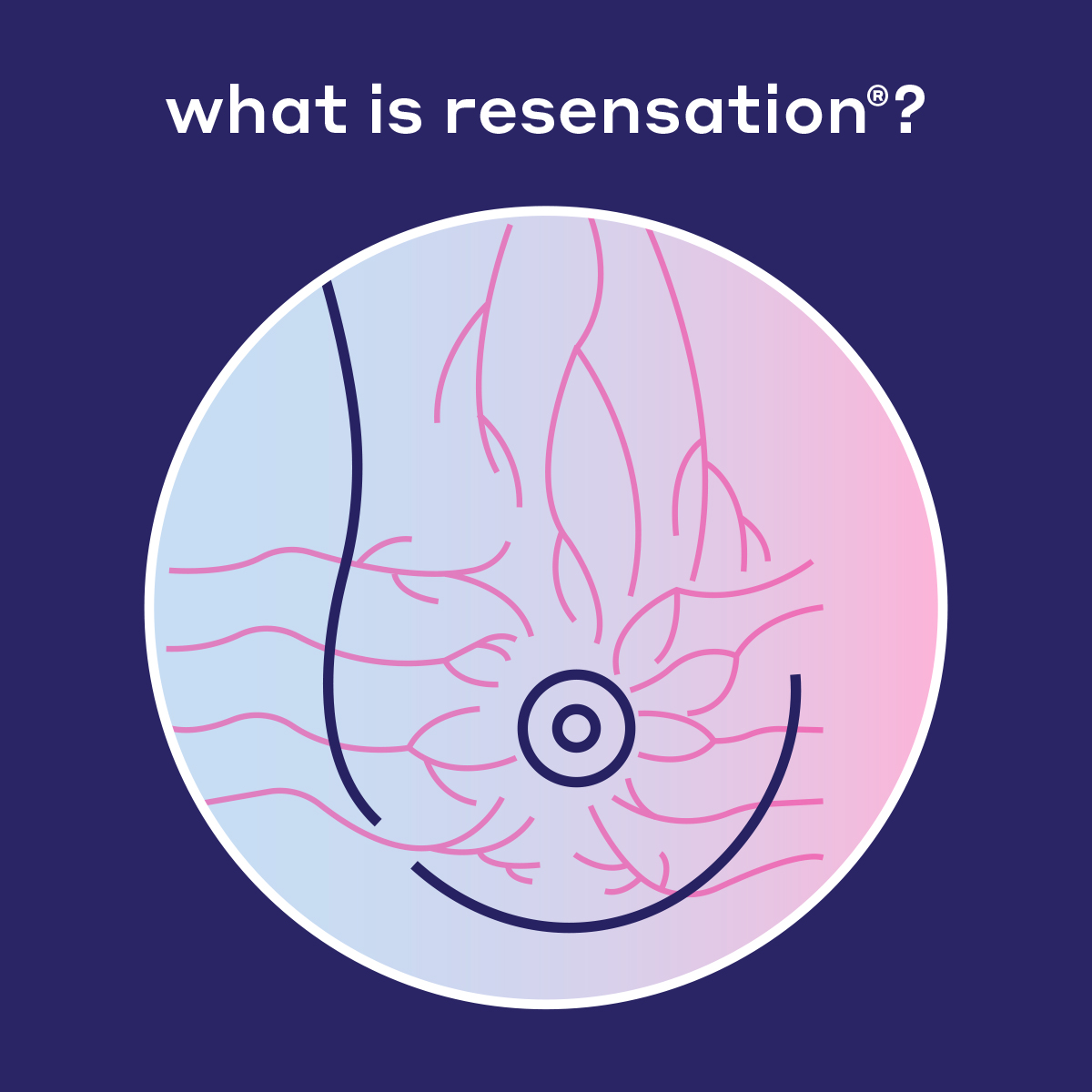
Resensation® is a surgical technique performed during breast reconstruction that allows surgeons to reconnect nerves cut during a mastectomy using allograft nerve tissue.

Over time, the nerve fibers regenerate, becoming a part of the woman’s own body. As the nerve fibers grow, theyhave the potential to gradually restore sensation to the breasts.

Are you a candidate for Resensation®?

You may be a candidate for breast nerve repair surgery with Resensation® if you are considering or undergoing breast reconstruction surgery after a mastectomy.

Each breast reconstruction journey is unique. Connecting with a plastic surgeon specializing in Resensation® can help you determine timing and candidacy based on your desires, medical condition and cancer treatment.
Resensation Nerve Repair Technique | What is Resensation?
Resensation Nerve Repair Technique | The Impact of Post-Masectomy Numbness

Frequently Asked Questions

Sensory nerves run from your breasts to the brain. They send messages that allow you to feel touch, temperature and even pain.

During a mastectomy, these nerves must be cut so the breast tissue can be removed. If the nerves aren’t repaired during breast reconstruction, they can no longer send signals to the brain. This can result in numbness and permanent loss of sensation to the breast area.

Loss of sensation after mastectomy can have a negative impact on your life. Think of how it feels when your mouth is numbed at the dentist. Or the weird sensation of bumping your foot after it’s fallen asleep, and you realize you can’t feel it. Numbness in your chest may be similar. Without the ability to detect touch, you might have a somewhat disconnected sense of your chest. The temperature of water in the shower, burns from hot objects like curling irons, or cuts from sharp objects—you might not feel any of it.

Research has shown that loss of breast sensation can affect body image and mental health, as well as the risk of injury.(1,2)  For many women, breasts without sensation don’t feel like a part of their own body.(3) Losing sensation can make it difficult to move past your mastectomy and start to feel whole again.(4)

Studies suggest that restoring breast sensation may improve your physical safety, body image and emotional health.(5)

A recent study found that women who had undergone Resensation® had experienced a positive impact on their quality of life after mastectomy and were more likely to report their reconstructed breasts “felt like their own.” (6,7)

Women report that regaining sensation helped them recover and move on from their experience with cancer, mastectomy and reconstruction. It also helped them feel more like their old selves.(7)

Resensation® is a surgical nerve repair technique performed during breast reconstruction. It can be performed during autologous (free flap) reconstruction and some breast implant reconstruction procedures. It allows surgeons to reconnect the nerves that were cut during a mastectomy by using allograft tissue—processed nerve allograft through the gift of donated nerve tissue. Over time, the nerve fibers regenerate, becoming a part of your own body. As the nerve fibers grow, they have the potential to gradually restore sensation to the breasts.

Historically, sensory nerves were not repaired during breast reconstruction surgery, leaving women with limited sensation—or none at all. While reconstructed breasts can help women look the way they want, without actively repairing nerves, women typically cannot feel touch or temperature in the chest area after reconstruction.

Resensation® offers the possibility that women may start to regain sensation several months after surgery. The feelings can continue to develop for up to two years.(8)

It takes time for nerves to heal and grow after they are repaired because they typically regenerate at a rate of 1 millimeter a day.(9)

Dr. Zeineh performs this procedure during an immediate reconstruction (at the same time as the mastectomy).

Resensation® may be an option for those seeking an aesthetic flat closure after mastectomy. During your consultation, Dr. Zeineh can discuss specific details of your case and help determine if this is an option for you.

Dr. Zeineh is trained in the Resensation® surgical technique and can help determine if you would be a candidate for the procedure.

Breast reconstruction is a covered procedure. However, Resensation® (breast neurotization) coverage may vary by insurer. Our insurance specialists will work with you to request pre-authorization before your procedure.

1. Koçan S, et al. Body image of women with breast cancer after mastectomy: a qualitative research. J Breast Health. 2016;12(4):145-150. https://www.ncbi.nlm.nih.gov/pmc/articles/PMC5351438/. Published October 1, 2016. Accessed January 12, 2023.
2. Faulkner HR, Colwell AS, Liao EC, Winograd JM, Austen WG Jr. Thermal Injury to Reconstructed Breasts from Commonly Used Warming Devices: A Risk for Reconstructive Failure. Plast Reconstr Surg Glob Open. 2016 Oct 27;4(10):e1033. https://www.ncbi.nlm.nih.gov/pmc/articles/PMC5096518/. Published October 27, 2016. Accessed January 12, 2023.
3. What to expect after Breast Reconstruction surgery. American Cancer Society. https://www.cancer.org/cancer/ breast-cancer/reconstruction-surgery/what-to-expect-after-breast-reconstruction-surgery.html. Revised September 19, 2022. Accessed January 12, 2023.
4. Axogen Corporation. More than skin deep: loss of sensation after mastectomy significantly impacts women’s quality of life. Axogen Corporation. 2021.
5. Temple CLF, et al. Sensibility following innervated free TRAM flap for breast reconstruction: part II. Inervation improves patient-rated quality of life. Plast Reconstr Surg. 2009;124(5):1419-1425. doi: 10.1097/ PRS.0b013e3181b98963.
6. Cornelissen, AJM, et al. Sensation of the autologous reconstructed breast improves quality of life: a pilot study. Breast Cancer Res Treat. 2018;167:687–695.
7. Crohan S, Campbell A. Breast sensations research report. Inspired Health. October 2020. Report on file at Axogen.
8. Yano K, et al. Breast reconstruction using the sensate latissimus dorsi musculocutaneous flap. Plastic and Reconstr Surg. 2002;109(6):1897–1902.
9. Grinsell D, et al. Peripheral nerve reconstruction after injury: a review of clinical and experimental therapies. Biomed Res Int. 2014;2014:698256. doi:10.1155/2014/698256.

Make An Appointment